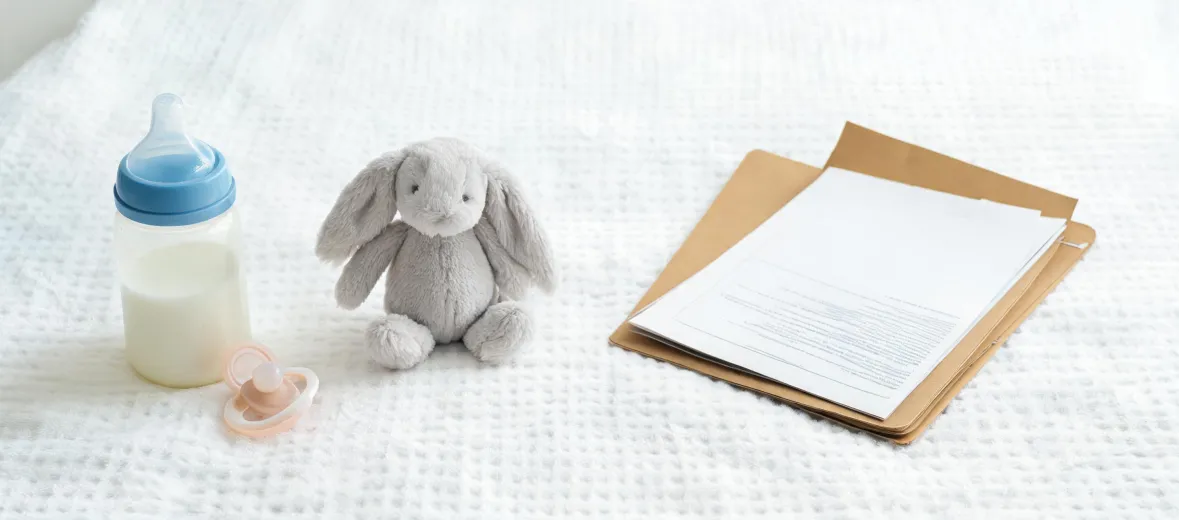
Yes, the MAM Welcome to the World newborn gift set is a genuinely useful bundle for new parents—but it earns that yes only when you understand what it demands of you. This is not a set you can rinse and reuse. The bottles, nipples, rings, pacifiers, and even the storage pieces inside are all infant feeding items, which means they fall under the same strict cleaning rules that apply to breast pump kits. The set's real value shows up in the first week, when you realize that every single part needs hot soapy water, a good scrubbing, and a final sanitizing step for the smallest babies. If that sounds like a fair trade for a complete newborn starter kit, this gift set deserves a spot on your registry. If you were hoping for a low-maintenance option, keep looking.
Is the MAM Welcome to the World Newborn Gift Set Worth It?
Is the MAM Welcome to the World set worth the hype? The short answer is yes, with a clear condition attached. Many reviewers focus on the soft-touch bottles, the self-sterilizing pacifiers, and the cute unboxing experience, but those features don't protect your baby by themselves. The set is only as safe as the cleaning routine you build around it. If you're ready to wash every component with hot, soapy water after each feeding, scrub the threads and valves, and sanitize daily while your baby is still very young, this bundle works beautifully. If you were hoping for a "set it and forget it" gift, this isn't it. It's a high-quality starter set that rewards attention to hygiene.
The reason cleaning is the real test comes from the CDC's own guidance on infant feeding items. According to the agency's page updated Mar. 19, 2025, these items include bottles and all their parts, nipples, rings, caps, valves, and membranes—exactly the sort of pieces you'll find in the MAM set. The CDC is blunt: germs can grow quickly in breast milk or infant formula residue that remains on parts, and the only way to stop that growth is to wash every item after each use and then sanitize. For babies younger than 2 months, or those born preterm or with weaker immunity, the CDC recommends sanitizing daily rather than just occasionally. That changes the math: you're not just buying bottles, you're buying a routine. That's the hidden test of any newborn feeding set, and the MAM set is no exception.
What Does the Set Really Need to Pass? The Cleaning Test
What does this set need to pass? Think of the cleaning test this way: the CDC's breast pump guidance warns that germs can grow quickly in breast milk residue that remains on pump parts. The same principle applies to every bottle and nipple in your gift set. You might assume that a quick rinse under warm water is enough, but the evidence says otherwise. The moment milk touches a bottle, a thin film of residue coats the inside, and within hours, that film becomes a breeding ground for bacteria if it isn't removed with soap and thorough scrubbing. So when you evaluate this set, don't count the number of pieces—count how many parts you'll have to scrub after every feeding. That's the real test.
But here's why this matters for the MAM set specifically: the CDC's infant feeding guidance explicitly lists bottles, nipples, rings, caps, valves, and membranes as items that need proper cleaning. This set contains most of these—bottles with multiple parts, pacifiers, and sometimes even a bottle brush or storage container. Each of those pieces has crevices where milk can hide. A valve that isn't taken apart and scrubbed can hold residue that no amount of rinsing will remove. The CDC guidance from Mar. 19, 2025, also emphasizes that you should clean these items after every use, and sanitize daily for babies under 2 months, born premature, or with weakened immunity. That means the MAM set isn't just a collection of cute objects; it's a set of responsibilities. The question isn't whether the bottles look nice—it's whether you're prepared to disassemble and deep-clean each one, every day.
How to Clean Every Piece: CDC-Approved Steps
So how do you clean every piece of the MAM set? The CDC's guidance, which was issued after a 2017 investigation into a Cronobacter infection in a Pennsylvania infant, gives a clear procedure. First, wash your hands, then disassemble every part—bottle, nipple, ring, valve—and rinse each piece under running water to remove loose milk. Next, wash each item in a clean basin with hot, soapy water, using a dedicated bottle brush to scrub the inside and outside, paying special attention to threads and crevices. Squeeze soapy water through the nipple holes, and don't forget the pacifiers if they're included. Finally, rinse everything again under running water or with a clean rinse basin. That's the baseline for every feeding item in the set, and it's non-negotiable.
Now for the part that trips up most new parents: sanitizing. The CDC says sanitizing is for 'extra germ removal' and recommends it at least once daily for babies under 2 months, or for any baby born early or with a compromised immune system. For older, healthy babies, daily sanitizing is still smart but not strictly required—the CDC says cleaning every day and sanitizing 'regularly' is enough. The easiest method at home is to boil the disassembled parts for 5 minutes after washing, or use a microwave steam sterilizer bag. Just be sure every piece is fully submerged and has no trapped air bubbles. The condition that changes everything is your baby's age and health: the younger and more vulnerable your baby, the more often you need to sanitize. If your baby falls into the premature or immunocompromised category, daily sanitizing becomes a non-negotiable step rather than a nice-to-have.
To see how the cleaning standard plays out in practice, compare two families who both receive this same set. Family A has a healthy 6-month-old who only takes a bottle occasionally. For them, washing every part with soap and hot water after each use and sanitizing once a week can be a workable routine. Family B has a 2-month-old who was born at 36 weeks and is still building immunity. For Family B, the same set demands a much stricter routine: disassemble, wash, and sanitize every single part at least once daily, and never let a bottle sit with milk residue for more than a few minutes. The set is identical, but the safe usage regime is different. Neither family is wrong; different babies call for different routines. That's why this set isn't a one-size-fits-all purchase—it's a set that works brilliantly when you match your cleaning effort to your baby's risk profile.
Common Cleaning Myths That Put Baby at Risk
One of the most dangerous myths about newborn feeding sets is that a quick rinse is enough to keep them safe. The CDC's guidance on cleaning feeding items warns that improper cleaning and maintenance of items that come in contact with breast milk can lead to the growth of bacteria and even mold that can contaminate the milk. That's a direct statement from the agency behind the new cleaning guidelines—and it applies just as much to the bottles in your MAM set as it does to a breast pump. Rinsing with water alone cannot remove the sticky film of milk residue from threads, valves, and nipple openings. If you skip soap and scrubbing, you're essentially leaving a culture medium for germs. The CDC makes clear that washing with soap and water and brushing all parts is the only reliable way to prevent contamination.
What happens when you skip that daily sanitizing step? The CDC's updated guidelines were driven by a real case: a Pennsylvania infant who was born prematurely at 29 weeks in April 2016 contracted Cronobacter, a rare but often fatal bacterial infection, from a contaminated breast pump part. The baby's death prompted the CDC to issue new cleaning recommendations. The lesson for anyone using the MAM set is direct: this isn't an abstract rule. A child died because a feeding item wasn't cleaned properly, and the bacteria found a way to thrive in milk residue. If you think skipping one day of sanitizing is harmless, consider that Cronobacter infections, though rare, are especially dangerous in the first weeks and months of life. The CDC estimates only about four to six cases a year, but each one can be devastating.
Why does daily sanitizing matter so much for a newborn? The answer comes down to how bacteria behave. The CDC explains that germs can grow quickly in breast milk or formula residue, and once a biofilm forms, a simple wash may not kill everything. For babies under 3 months old, or those born prematurely or with weakened immune systems, the CDC recommends sanitizing feeding items at least once daily as 'extra germ removal.' That doesn't mean you need to sterilize after every feeding—that would be exhausting. It means you need a reliable, once-a-day step that kills the bacteria that survived washing. Boiling for five minutes, using a steam sterilizer, or running parts through a dishwasher with a heated dry cycle all count. The key is consistency: a missed day today can let a colony establish itself by tomorrow, and for a fragile newborn that's a risk no gift set is worth taking.
Should You Buy This Set? A Simple Decision Rule
So, should you buy this set? Here's a simple decision rule based on the CDC's own conditions. Buy it if you have a baby over 2 months old, born at term, with no health issues, and you're comfortable with a routine of washing after every feed and sanitizing a few times a week. You'll get a well-designed set that works with that level of care. But if your baby is younger than 2 months, was born premature, or has a weakened immune system, you must be willing to sanitize every part daily—no exceptions. In that case, the MAM set is still a good choice, but only if you're ready to treat cleaning as a daily ritual, not an occasional chore. If you know you'll struggle to keep up with disassembly and daily sterilizing, a simpler set with fewer parts might be a safer option. The CDC's age-and-health conditions aren't just suggestions; they're the dividing line between safe and risky.
What if you're buying this set as a gift for someone else? You can't control how the recipient cleans, but you can make the right choice for their situation. If the parents-to-be are first-timers, a set with fewer, easier-to-clean pieces might be kinder than one with lots of nooks and crannies. On the other hand, if they've already shown they're diligent about sterilization, the set's thoughtful touches will be genuinely useful. The best question to ask yourself is not 'Does this set look adorable?' but 'Will the person using it keep up with daily sanitizing for the first few months?' If the answer is yes, this set is a wonderful gift. If it's a maybe, consider a simpler alternative or include a note about the cleaning routine. The gift isn't just the box; it's the knowledge you pass along with it.
The Verdict: Yes, With a Cleaning Commitment
So here's the final verdict: yes, this set is worth buying—but only with a cleaning commitment. The set delivers on convenience, with functional bottles and pacifiers packed in a tidy bundle. What makes it a smart purchase is not the design or the brand name; it's your ability to follow the CDC's cleaning and sanitizing rules for every piece. If your baby is over 2 months old and healthy, you can relax a little with a regular schedule. If you have a newborn under 2 months, a preemie, or a baby with a fragile immune system, you must commit to daily sanitizing without exceptions. In either case, the MAM set can serve you well, provided you treat cleaning as part of feeding, not as an afterthought. That's the condition that turns a nice-to-have gift into a safe one.
Think back to the moment you unpacked the MAM set—maybe it was at a baby shower, or in your own nursery, with the boxes spread out and all those little pieces waiting. That excitement is exactly why this set is so appealing. But the same pieces that look so cute on the counter are the ones you'll be scrubbing at 2 a.m. after a feeding. The question is whether you're ready for that reality. This set is a wonderful way to start, but the real gift you can give your baby is a parent who understands that cleaning isn't optional. If you can embrace that, the set will serve you faithfully through the newborn months. If not, no amount of clever design will make up for a missed sanitizing session. Choose the set, but also choose the routine—that's the verdict that actually matters.
The daily sanitizing step is the difference between a cute gift and a safe one for your newborn.