-
Start with the Hygiene Test Before You Fall for the Cute Packaging
-
Know Why Cleanliness Is the First Review Test
-
Judge Every Part Against the CDC’s Cleaning Checklist
-
Match Sanitizing Frequency to Your Baby’s Risk Level
-
Avoid the Mistakes That Turn a Cute Set Into a Risk
-
Apply the One-Rule Verdict Before You Buy
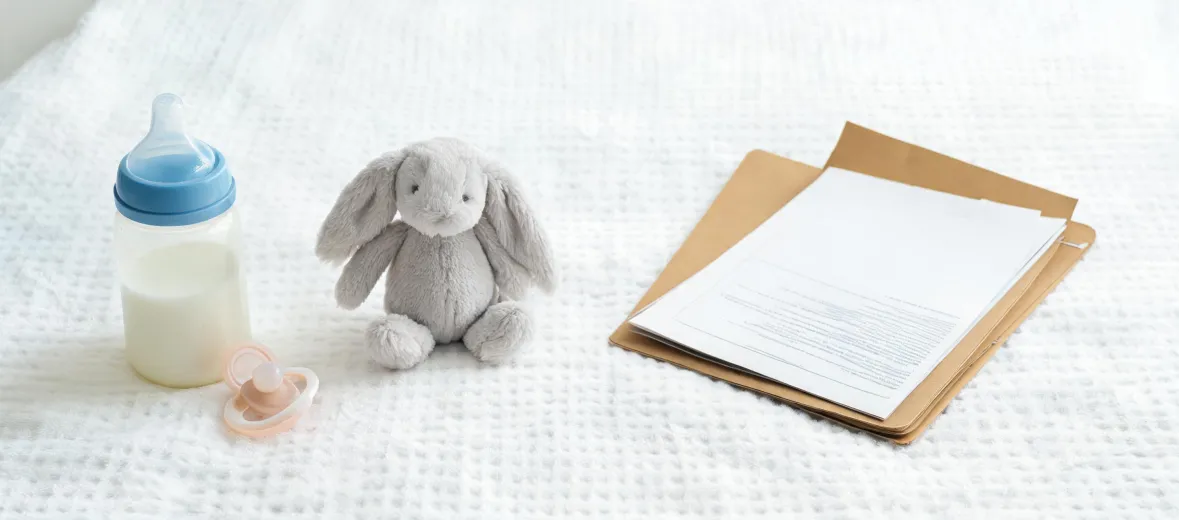
You’re looking at the mam Welcome to the World Newborn Gift Set and wondering if it’s genuinely worth the money or just another cute package. The direct answer: yes, it’s worth buying, but only if you evaluate it through the same hygiene lens the CDC applies to breast pump parts. That lens matters more than any adorable print or brand name, because germs grow quickly in breast milk or residue left on feeding items — and a newborn’s immune system can’t handle what an older baby might shrug off. When the Centers for Disease Control and Prevention explains that keeping pump parts clean is critical, the same rule extends to every bottle, nipple, and pacifier that touches your baby’s milk. So before you fall for the packaging, ask whether each piece in this set can be washed thoroughly and sanitized without frustration. If it can, you have a genuinely useful gift; if not, the cuteness is a distraction from a real health risk.
Start with the Hygiene Test Before You Fall for the Cute Packaging
Wondering whether the mam Welcome to the World Newborn Gift Set is genuinely worth the money or just another cute package? The direct answer: yes, it’s worth buying, but only if you evaluate it through the same hygiene lens the CDC applies to breast pump parts. That lens matters more than any adorable print or brand name, because germs grow quickly in breast milk or residue left on feeding items — and a newborn’s immune system can’t handle what an older baby might shrug off. When the Centers for Disease Control and Prevention explains that keeping pump parts clean is critical, the same rule extends to every bottle, nipple, and pacifier that touches your baby’s milk. So before you fall for the packaging, ask whether each piece in this set can be washed thoroughly and sanitized without frustration. If it can, you have a genuinely useful gift; if not, the cuteness is a distraction from a real health risk.
But what does “hygiene lens” actually mean in practice? The CDC’s updated infant feeding guidance, published Mar. 19, 2025, is your reference point. It says infant feeding items include bottles and all their parts — nipples, rings, caps, valves, membranes — plus syringes, medicine cups, spoons, and supplemental nursing systems. The rule is straightforward: clean these items daily, and sanitize them for extra germ removal. The stricter daily sanitizing recommendation applies specifically to babies under 2 months, those born premature, or those with a weakened immune system. That’s the yardstick you should bring to any newborn gift set. A set that makes it easy to follow this routine — with parts that come apart, tolerate hot water or steam, and dry without hidden moisture — passes. A set that fights you at every step fails, no matter how beautifully it’s boxed.
Know Why Cleanliness Is the First Review Test
Here’s the mechanism that makes cleanliness the first review test: germs don’t need much to thrive. Milk residue left on a bottle or pacifier is a perfect culture medium, and the CDC warns that germs can grow quickly in breast milk or the residue that remains on feeding parts. A quick rinse under warm water removes the visible milk but leaves a thin biofilm behind, and that film can harbor bacteria like cronobacter — a pathogen that is rare but can be fatal for newborns. The CDC’s updated guidance, published Mar. 19, 2025, translates this into a simple routine: wash every part that touches milk in hot, soapy water, rinse, and then air-dry on a clean surface. For extra germ removal, you sanitize — either by boiling, steaming, or using a sterilizer. That’s not an optional upgrade; it’s the baseline for protecting a baby whose digestive and immune systems are still developing. When you review a gift set, you’re really reviewing whether its parts can survive this routine every single day without warping, cracking, or trapping moisture.
So ask yourself this: when you picture washing a bottle at 2 a.m., half asleep, do you want to disassemble six fiddly pieces, or do you want a set that clicks apart in seconds? More importantly, can every nook be reached by a brush and dried completely? If a gift set’s parts have crevices where water pools or where milk film hides, the daily cleaning promise breaks down. And once you miss a spot, the residue doesn’t just sit there — it feeds bacteria until the next feeding. The question isn’t whether the set looks clean after a rinse; it’s whether you can prove to yourself that every surface that touches milk has been cleaned and then sanitized when your baby is in a high-risk group. That question, more than the brand’s reputation, determines whether this purchase is safe.
The condition that changes everything is your baby’s age and health. Exclusive Pumping’s guide to sterilizing pump parts, which mirrors CDC advice, says you don’t have to sterilize after every session, but for extra germ removal you should sanitize feeding items at least once daily. That daily sanitizing becomes especially important when your baby is younger than 3 months, was born prematurely, or has a weakened immune system. For those infants, the CDC’s 2025 update goes even further: sanitize daily if your baby is under 2 months old, was born premature, or has a compromised immune system. So a gift set isn’t just competing on looks; it has to be compatible with a daily boil or steam cycle. If the included bottle’s material can’t withstand repeated sanitizing without degrading, or if the pacifier has a shield that collects moisture, then that cute set is actively working against the care routine your baby needs.
Judge Every Part Against the CDC’s Cleaning Checklist
Now translate the CDC guidance into a concrete product checklist for the mam set. First, count the parts: a bottle, a nipple, a ring, a cap, and a pacifier — each must come apart into separate pieces you can wash and dry individually. Second, check the material: medical-grade silicone or polypropylene that can be boiled or steamed without deforming. Third, look for smooth surfaces without deep ridges; the CDC mechanism literature warns that improper cleaning of items that touch breast milk can lead to bacteria and even mold growth, and mold loves trapped moisture in crevices. Fourth, test the assembly: after sanitizing, can you reassemble it with clean hands without touching the inside of the nipple? Finally, consider the drying setup — a set with vents or a drying rack is better than one where water pools inside the nipple shield. That checklist turns an abstract “safe for newborns” claim into five questions you can answer in the store.
These criteria aren’t arbitrary; they come directly from the CDC’s revised approach. The new guidelines, which the CDC issued after investigating outbreaks linked to contaminated feeding equipment, stress that cleaning and sanitizing are distinct steps — washing removes soil, sanitizing reduces germs to safe levels. For a gift set, that means you need both capabilities. A bottle that says “dishwasher safe” might still trap milk in the vent if the dishwasher’s low cycle doesn’t reach the crevice; a pacifier that’s labeled “boil safe” might have a hollow handle that fills with water and never dries. The evaluation criteria are simple: every piece must be washable by hand or in a dishwasher with hot water, sanitizable by boiling or steaming, and designed so that no liquid can linger. When you check the mam set’s individual parts, you’re not being paranoid — you’re applying the same standard that prevents real-world contamination.
Match Sanitizing Frequency to Your Baby’s Risk Level
The CDC’s 2025 guidance draws a clear line between everyday cleaning and the stricter routine for higher-risk babies. For a healthy full-term newborn older than 2 months, cleaning bottles and pacifiers daily with soap and water, and sanitizing periodically, is sufficient. But the moment your baby is younger than 2 months, born prematurely, or has a weakened immune system, the CDC recommends sanitizing every day. That’s a meaningful difference: a premature baby might be 7 weeks old chronologically but still developmentally similar to a 1-month-old, and their gut lining is more permeable to bacteria. The same logic applies if you’re pumping and bottle-feeding expressed milk — your pump parts and the bottle nipples in this gift set fall under the same “feeding items” umbrella. So your decision guide is simple: if your baby falls into any high-risk category, the set’s items must tolerate daily sanitizing; if not, you can ease up on frequency but never on the cleanliness of the first wash.
Let’s apply that to a real scenario. Picture a baby born at 37 weeks — technically “late preterm.” That baby is under 2 months old and may have a less mature immune response, so the CDC’s daily sanitizing rule applies. If the mam set’s bottle is made of a material that can be boiled each evening without clouding, and the pacifier can be steamed with the bottle, then the set fits the routine. If instead the bottle is decorated with a printed design that chips after a few boils, or the pacifier has a soft-touch coating that traps water, then even a beautiful set becomes a liability. Another example: a healthy 4-month-old. For that baby, you might sanitize once every few days, but you still need to clean thoroughly after every use. The set’s bottle brush-ability and easy drying matter just as much. So the decision guide isn’t about whether the set is “good” in the abstract — it’s about whether it matches the specific routine your baby’s health requires.
Avoid the Mistakes That Turn a Cute Set Into a Risk
One outdated habit deserves special attention, because it shows how a well-meaning parent can turn a clean-looking set dangerous. Before 2017, many parents rinsed breast pump parts and stored them in the fridge between uses, believing the cold would keep bacteria at bay. That practice came under scrutiny after the CDC investigated a case where a baby died from a rare but serious infection contracted through improperly cleaned breast pump parts. The CDC’s new guidelines, published in August 2017 and updated August 25, 2017, explicitly moved away from the fridge-shortcut, urging parents to wash and sanitize instead. The same logic applies to any feeding item in a newborn gift set: a bottle that’s simply rinsed and set aside, or a pacifier that’s licked “clean” and popped back in the box, is a reset button for bacterial growth. The fridge trick doesn’t kill germs; it just slows them down — and for newborns, slowed down is still too fast.
The correct habit is built on evidence, not convenience. When the CDC updated its guidelines, the trigger was a Pennsylvania infant born prematurely at 29 weeks in April 2016 who contracted cronobacter — a rare infection the CDC sees in only about four to six cases a year. Cronobacter can live in dry environments and survive on surfaces, which is why washing alone isn’t enough for vulnerable babies; the parts need sanitizing to actually kill the bacteria. For your daily routine, that means: wash your hands first, disassemble every part, rinse in warm water, wash in hot soapy water, rinse again, then sanitize using boiling water or steam. After sanitizing, air-dry completely on a clean towel or rack — never towel-dry, because a towel can reintroduce bacteria. And never store wet parts; moisture is the enemy. If the mam set’s parts dry quickly and don’t trap water, then the correct habit is easy to follow. If they stay damp in the nipple shield for hours, you’ll be fighting the product every day.
Apply the One-Rule Verdict Before You Buy
So here’s the verdict in one rule: buy this set if, and only if, every piece that touches milk can be cleaned and sanitized with the same ease as a basic glass bottle. That rule settles the debate between cute packaging and practical safety. The mam Welcome to the World Newborn Gift Set can earn your money, but only after you’ve held each part, disassembled it, and imagined washing it at the end of a sleepless night. If the bottle’s vent is brushable, the pacifier’s shield dries freely, and the materials hold up to boiling, then it’s a genuinely thoughtful gift for a new parent. If any piece makes you hesitate — a smooth interior that looks clean but hides residue, a decoration that won’t survive sanitizing — then choose a simpler set. The cuteness fades; the safety routine doesn’t.
So here’s your final check, straight from the CDC’s framework updated Mar. 19, 2025: if your baby is under 2 months old, was born premature, or has a compromised immune system, sanitize feeding items daily. That sentence isn’t a suggestion; it’s the condition that makes any gift set safe or unsafe. When you hand this set to a new parent, you’re also handing them a responsibility — to clean and sanitize every time. The set that makes that responsibility easier is worth money; the set that makes it harder is a liability, no matter how sweet the welcome-to-the-world message on the box. So before you buy, take the bottle in one hand and ask: would I trust this piece in boiling water every night? If the answer is yes, wrap it up. If it’s “maybe” or “I’m not sure,” leave it on the shelf. That’s the whole review.
Your final check comes from the CDC’s own framework, updated Mar. 19, 2025: if your baby is under 2 months old, was born premature, or has a weakened immune system, sanitize feeding items daily. That sentence isn’t a suggestion; it’s the condition that makes any gift set safe or unsafe. When you hand this set to a new parent, you’re also handing them a responsibility — to clean and sanitize every time. The set that makes that responsibility easier is worth money; the set that makes it harder is a liability, no matter how sweet the welcome-to-the-world message on the box. So before you buy, take the bottle in one hand and ask: would I trust this piece in boiling water every night? If the answer is yes, wrap it up. If it’s “maybe” or “I’m not sure,” leave it on the shelf. That’s the whole review.